

In Memory of J. David Bamberger: A Legacy of Regeneration

J. David Bamberger was an inspiration to me, to us, to our contributors and allies across the Texas Hill Country, and to people far beyond it. His work did not just change a place. It changed how many of us understand what land can become when it is given time, patience, and respect.
Bamberger showed the world that degraded land is not a lost cause, but an opportunity.
He showed that hydrological systems have value, that water remembers how to move through a landscape, and that if you give it the right conditions, it will provide abundance. For those of us working in regeneration today, his life stands as proof that restoration is not a theory. It is something you can witness with your own eyes if you are willing to commit.

Photo from Bambergerranch.org
Bamberger shared a quote that stayed with him throughout his life. It was from the ocean explorer William Beebe, and it shaped the way Bamberger understood loss, responsibility, and time.
“A work of art or the scroll of a symphony can be lost and redone, resurrected. But when a species is lost, another heaven and another Earth must pass before it even has the opportunity to be born again.”
That idea runs like a quiet current through everything Bamberger did. It explains why he cared so deeply about land that others had written off. It explains why he thought in generations instead of returns. And it explains why he believed that restoration was not optional, but necessary.
For me, that quote still lands hard. It keeps me grounded in the bigger picture. It reminds me that what we lose in the natural world is not easily replaced. You cannot rebuild a spring the way you rebuild a fence. You cannot manufacture an aquifer once it is gone. And you cannot undo extinction. Bamberger understood this, not as an abstraction, but as something personal. He carried that understanding into every decision he made on the land.
He chose, intentionally, what he believed was the worst piece of land he could find in the Texas Hill Country. At the time, it was brush-choked, dry, and written off as worthless. There was no grass to speak of. Springs were gone. Wells came up empty. Most people would have seen failure. Bamberger saw a question worth asking.
What followed was not quick, and it was not glamorous. He removed invasive woody species. He replanted native grasses. He paid attention to roots, soil, contour, and rainfall. He trusted grass to do the work that machines and concrete never could. Slowly, water began to sink into the land instead of running off. Slowly, a perched aquifer refilled. Then one spring came back to life. Then another. Eventually, there were many.
Bamberger liked to say that grass was the greatest conservation tool ever made. That was not a slogan. It was an observation born of patience. Grass slowed water. Grass built soil. Grass made infiltration possible. And once water had somewhere to go, it stayed. Springs returned. Creeks flowed. Wildlife followed. What had been written off as ruined became alive again.
This is where his influence on Terra Advocati runs deepest. Our work is rooted in the same understanding that water must be slowed, spread, and sunk into the land. That hydrology comes first. That restoration is a process, not a product. And that working with natural systems, rather than against them, is the only path that creates natural abundance over time.
Bamberger named his ranch Selah, a word that means to pause, to stop, to look around and reflect.
That pause matters today more than ever!
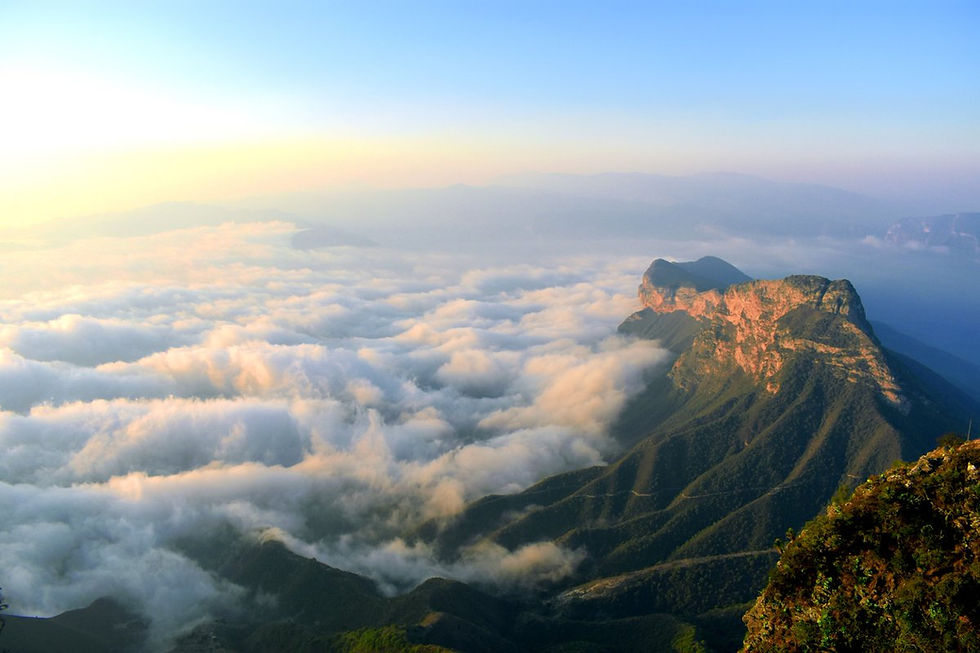
In a world moving fast toward depletion and overdevelopment, nature’s beauty reminds us to slow down long enough to notice what is breaking, and what is still capable of healing.
Bamberger did not believe that the government alone could solve these problems, and he did not wait for permission to act. He believed that individuals and landowners had both the power and the responsibility to participate in restoration. He also believed deeply in sharing what he learned.
Selah was never meant to be a private success. It was meant to be a living demonstration, a place where people could see with their own eyes that healing is possible.
That ethic of sharing, caring, and spreading knowledge is something we carry forward in every project we take on. Whether we are working on watershed restoration, regenerative agriculture, education, or community-based land stewardship, the influence is there. We design with hydrology in mind. We prioritize infiltration and recharge. Slow, spread, sink, soak, and store! That’s the deal.
We trust living systems to do the heavy lifting when they are given the chance. And we treat land not as a commodity to be extracted from, but as a relationship, a regenerative reservoir of abundance.
His legacy is not just the land he restored. It is carried on in the hearts, minds, and actions of the countless people who learned from him, the landowners who changed their practices, the students who experienced nature for the first time, and the ongoing work that continues because he proved what was possible, and gave us actionable strategies to do so.
At Terra Advocati, we consider ourselves inspired by, and part of that living legacy. We are carrying forward a philosophy that says land can recover, water can return, and human beings can choose to act as stewards rather than owners or extractors.
Today we honor J. David Bamberger not only for what he accomplished, but for the clarity he brought to what matters. He respected the natural world enough to give it time, protection, and permanence. And in doing so, he gave all of us a model for how to live in relationship with the land.
That work continues, and we are forever grateful to Mr. Bamberger for helping to ground us in our relationship with nature.

Comments